Biological growth in low‑temperature heating systems has always been a potential risk. However, after supplying products to thousands of low‑temperature underfloor heating systems over many years, we had never received reports of this issue occurring. Because of this, there was previously no need to offer biocide solutions to the market.
In recent years, however, we have encountered the first confirmed cases of biological growth in low-temperature underfloor heating systems, and these cases appear to be increasing. Customers in several regions across New Zealand have reported systems becoming blocked with a thick biological sludge, requiring extensive remedial work to remove the deposits and restore system performance.
Through consultation with Fernox, we established that although Fernox F1 does not prevent biological growth, it also does not provide a food source for bacteria. This has contributed to many years of trouble-free operation in our systems. Unfortunately, rising nitrate levels in water supplies have now created conditions where the water used to fill central heating systems contains enough nutrients for bacteria to thrive, particularly in warm, low-temperature environments ideal for bacterial growth.
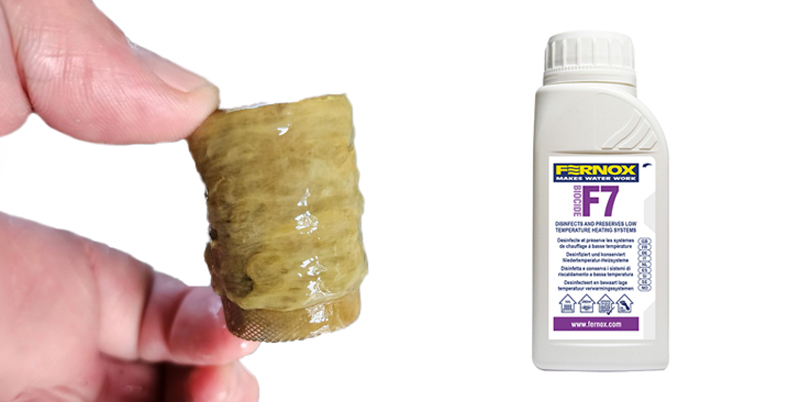
Following multiple reports of this issue across New Zealand, we will now be stocking Fernox F7 Biocide for installers to use as a preventative treatment against biological contamination.
Fernox F7 is designed to prevent biological growth. Its two active ingredients offer both rapid and long-lasting protection against bacterial development and accumulation within the system. If bacterial contamination has already occurred, F7 can eliminate the living organisms but cannot break down existing deposits. Systems that are already affected will therefore require a full flush and clean to remove any buildup before F7 is added.
For new systems that may be susceptible to biological contamination, we strongly recommend advising clients to include Fernox F7 treatment during commissioning. The small upfront cost provides significant protection against biological growth and can save clients from the potentially high remedial costs of resolving contamination later.