As every heating professional knows, a central heating system requires more than a quality installation to deliver reliable long-term performance. Ongoing maintenance and early fault identification play a crucial role in preventing more significant issues and ensuring systems continue to operate efficiently for customers.
After more than 24 years of providing technical support across the industry, we've gained valuable insight into the most common enquiries and faults encountered in the field. In this article, we'll share some of those recurring issues, along with practical checks and troubleshooting steps that can often be carried out before further technical intervention is required.
By familiarising yourself and your team with these common scenarios, you can enhance the service you already provide, strengthen customer confidence, and continue building a reputation for delivering reliable, professional heating system maintenance and support.
General System Health Checks
Many heating system faults present early warning signs before they develop into significant or costly issues. Incorporating basic system health checks into regular maintenance visits can help identify potential problems early, improve reliability, and reduce unnecessary call-backs.
- Check System Pressure Regularly
For closed-loop systems, pressure should typically sit between 1.0 and 1.5 bar when the system is cold. Pressure outside the recommended range can affect system performance, circulation, and overall efficiency. Always confirm operating parameters against the manufacturer's recommendations. - Monitor for Pressure Loss
A gradual loss of pressure over time often indicates an underlying issue. Common causes include small system leaks, faulty pressure relief valves, air vent discharge, or a failed expansion vessel. Tracking pressure trends can often help pinpoint faults before they result in system shutdowns. - Check for Visible Leaks
Inspect all accessible areas including heat sources, manifolds, radiators, pipework, valves, pressure relief valve outlets, automatic air vents, pumps, and fittings. Even minor leaks can introduce oxygen into the system, accelerating corrosion and causing larger issues over time. - Listen to the System
Unusual operating noises can provide valuable diagnostic clues. Gurgling often indicates trapped air, banging may suggest thermal expansion or flow issues, and excessive pump noise could point towards cavitation, air ingress, or restricted flow conditions.
Air in the System
Air remains one of the most common causes of poor heating performance and customer complaints. Even small amounts of trapped air can significantly impact circulation, efficiency, and system comfort.
- Underfloor Heating Circuit Performance
Poor flow rates through underfloor heating circuits may indicate air accumulation, debris build-up, or partially blocked loops. Where balancing adjustments do not restore performance, flushing individual circuits may be required to restore design flow rates. - Cold Spots on Radiators
Radiators with cold spots typically indicate trapped air. Bleeding radiators should form part of routine maintenance and can quickly restore heat output and system efficiency. - Air Locks in Primary Circuits
Air trapped in primary pipework can create a hydraulic lock, preventing adequate circulation through the heat source. This often presents as low flow alarms, excessive cycling, poor heat transfer, or complete loss of heating. Thorough flushing and proper venting procedures are generally required to resolve these issues. - Investigate the Root Cause
While removing air resolves the immediate symptom, it's equally important to determine how the air entered the system. Pressure fluctuations, unsealed components, leaks, poor filling procedures, and incorrectly charged expansion vessels are all common contributors.
Heat Pump Operation
As heat pumps become increasingly popular, ensuring customers understand their operation can reduce unnecessary service calls and improve customer satisfaction.
- Understanding Defrost Cycles
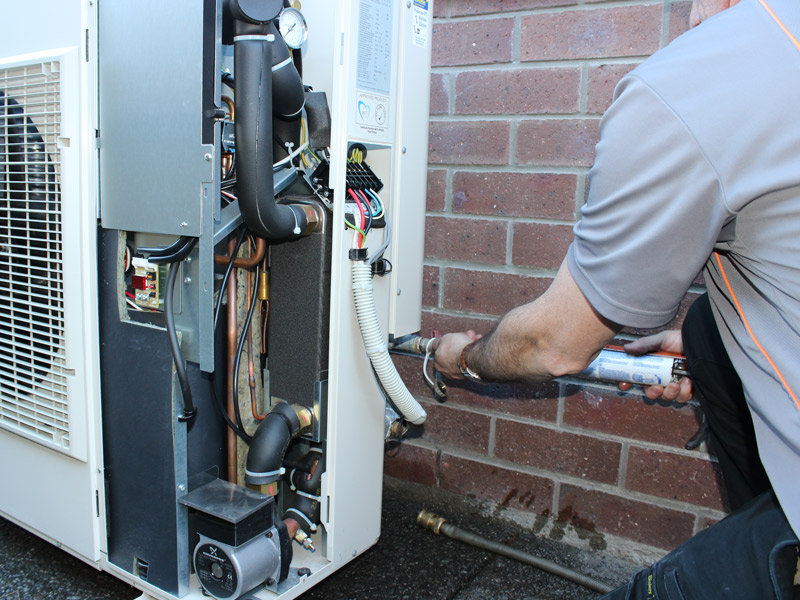
Ice formation on outdoor coils during colder weather is a normal part of heat pump operation. During a defrost cycle, the unit temporarily reverses operation to remove accumulated frost buildup. Customers may notice steam, water drainage, or temporary changes in performance during this process, all of which are normal. - Keep Outdoor Units Clear
Outdoor units rely on a constant supply of ambient air to operate efficiently. Leaves, grass clippings, vegetation, snow, and general debris can restrict airflow and place unnecessary strain on the system. Regular visual inspections should form part of every maintenance visit. - Maintain Adequate Airflow
Restricted airflow remains one of the most common heat pump performance issues. Decorative screens, fencing, storage items, or landscaping can significantly reduce the unit's ability to exchange energy with the surrounding air. This leads to reduced efficiency, increased running costs, more frequent defrost cycles, and reduced heating capacity. Maintaining manufacturer's recommended clearances around the unit is essential.
Filters and Strainers
Effective water quality management is critical to the long-term performance and reliability of any hydronic heating system.
- Magnetic Filter Cleaning
Magnetic filters are recommended for older systems or systems being retrofit with new heat sources. They catch ferrous debris that can end up being circulated through the system and allow for easy removal and cleaning during a service. This prevents build-ups in components like radiators, valves, and heat exchangers that can result in loss of efficiency or damage. - Recognising the Symptoms of a Blocked Filter
As filters block, they become restrictive; systems may experience reduced heating output, poor circulation, low flow faults, increased energy consumption, and excessive pump workload. These symptoms can often resemble far more serious faults, so filter inspection and cleaning should always be one of the first checks performed. - Appliance Return Strainers
The return strainer located at the appliance is one of the most important protective components in the system. Its role is to prevent debris from entering and fouling the heat exchanger, which can significantly impact performance and potentially cause expensive damage. Regular inspection and cleaning should never be overlooked. - Water Quality Matters
Excessive sludge, magnetite, or debris accumulation is often a symptom of wider water quality issues. Where contamination is repeatedly found, a more comprehensive system clean and review of inhibitor levels may be required.
Annual Maintenance
Routine servicing remains one of the most effective ways to maximise system performance, extend equipment life expectancy, and reduce unexpected breakdowns.
Why Annual Servicing Matters
Annual maintenance helps ensure systems continue operating safely, efficiently, and in accordance with manufacturer requirements. It also provides an opportunity to identify wear and performance concerns before they develop into major faults. For many products, annual servicing may also form part of warranty obligations.
Required Annual Service Items
- System Pressure Check
Confirm operating pressure is within specification and investigate any signs of pressure instability. - Expansion Vessel Check
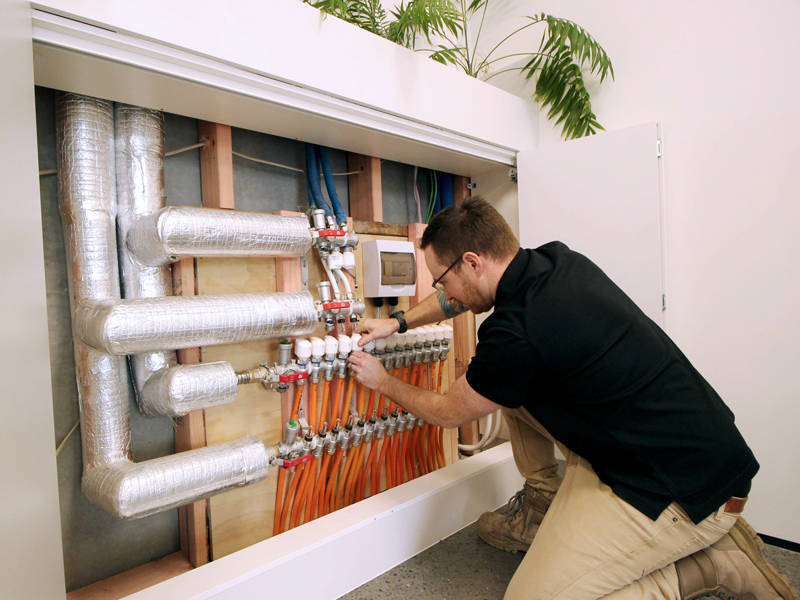
Verify vessel charge pressure and operation to ensure adequate accommodation of system expansion. This should be checked with the system water pressure dropped to 0 Bar. - Component Condition Assessment
Inspect pumps, valves, manifolds, sensors, controls, pipework, and associated components for signs of wear or deterioration. - Leak and Corrosion Inspection
Check accessible pipework and equipment for signs of leakage, corrosion, or moisture ingress that may affect long-term reliability. - Glycol Testing (Where Applicable)
Confirm glycol concentration for freeze protection, remain within recommended parameters. - Filter and Separator Cleaning
Clean all filters and magnetic filters to maintain flow rates and protect system components. - Appliance Performance Checks
Review operating temperatures, flow rates, pressures, alarms, and overall system performance against expected operating conditions. - Electrical Inspection
Check wiring integrity, electrical connections, isolation devices, and control operation. - Inhibitor Testing
Test inhibitor levels and replenish where necessary to maintain corrosion protection throughout the system. - Review System Configuration and control
Discuss customer usage patterns and verify settings continue to align with the property's heating requirements. Confirm the system operates as expected when there is a call for heat. - Flue Gas Analysis (Gas and Diesel Boilers)
Analyse combustion performance and efficiency, ensuring the appliance is operating within specification. - Heat Exchanger Cleaning (Gas and Diesel Boilers)
Remove combustion deposits and contamination that may impact efficiency, reliability, and emissions performance. - Photos
A photo says a thousand words. Take relevant photos for your servicing records. These can be critical when benchmarking performance at the next annual service or even a break down.
Many technical support enquiries stem from issues that can be identified through systematic inspection, routine maintenance, and a structured fault-finding process. Taking the time to carry out these fundamental checks can often resolve problems quickly, improve system reliability, reduce downtime, and strengthen customer confidence in your service offering.
While these checks can help eliminate many common causes, we understand that not every fault is straightforward. Some issues require deeper investigation, system-specific knowledge, or additional technical guidance. That's where our technical support team is here to help.
We encourage installers and service technicians to undertake initial fault finding where possible, as the information gathered often helps us provide faster and more targeted support. With your knowledge of the installation and our technical expertise, we can work together to efficiently diagnose and resolve even the more complex system issues to achieve the best outcome for your customers.
Technical support is a partnership, and when you need us, we're here to help.